
Brisbane’s Transition to a World City
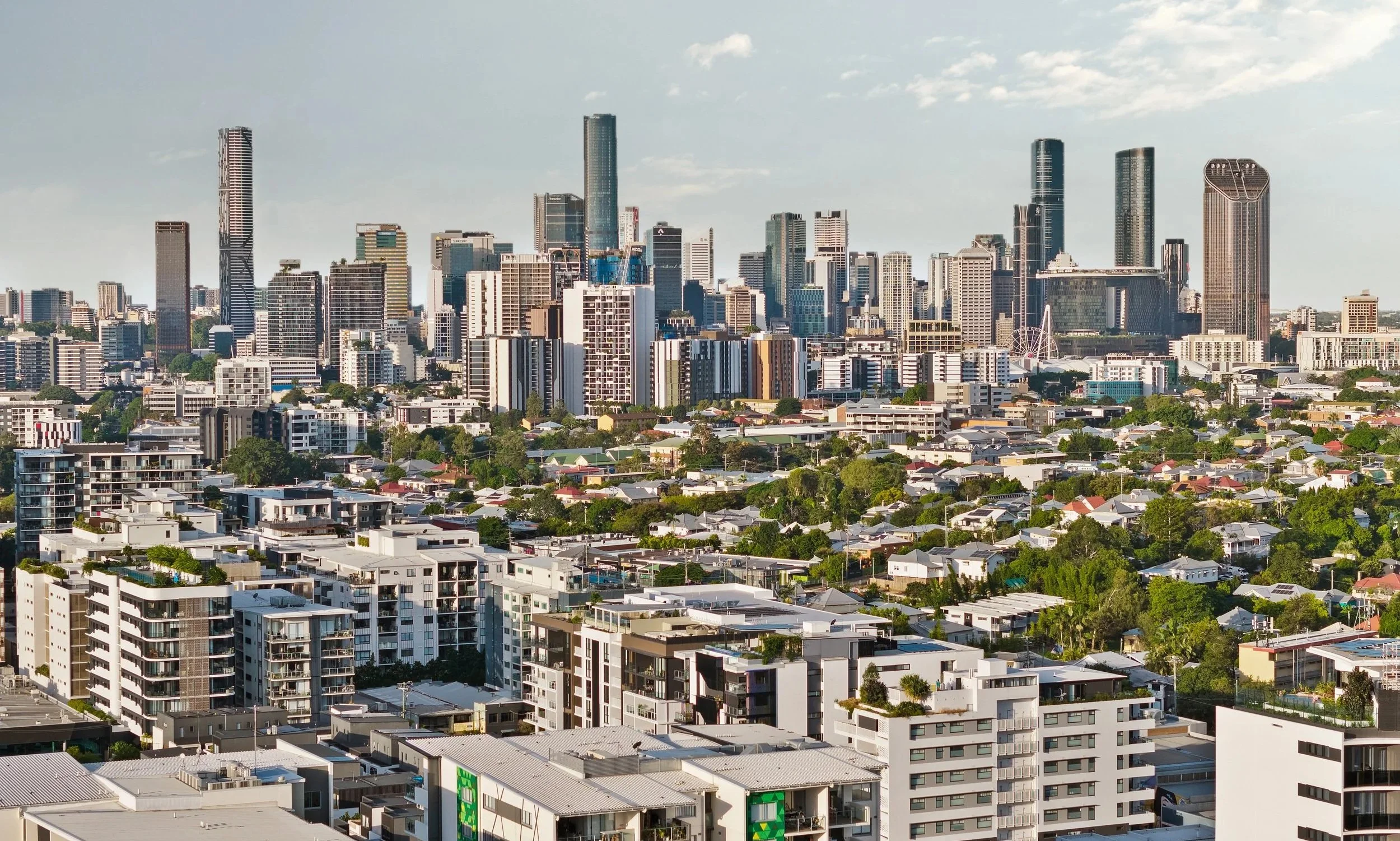
Bankside West End
Most cities follow a predictable evolution. They begin as overlooked opportunities, move into a phase of discovery, and eventually reach validation—where global recognition is backed by real investment, infrastructure and pricing.
Brisbane has now unmistakably entered this final phase.
For many years, Brisbane was framed as a “relative value” story—affordable compared to Sydney or Melbourne, attractive but not essential on a global stage. That narrative has shifted. Today, Brisbane is being actively repositioned alongside international markets, with growing attention from global capital, high-net-worth buyers and institutional investment.
This is - the point where a city stops being compared locally and starts being compared globally.
Why Price Per Square Metre Matters
The clearest way to understand Brisbane’s position today is through price per square metre.
In global cities, this is the metric that ultimately defines value.
Brisbane has seen a sharp increase in top-end pricing, with ultra-prime apartments now achieving levels that would have seemed implausible even five to ten years ago. Yet when benchmarked internationally—and even against Australia’s own most expensive markets—it still sits at a discount. Cities like Sydney rank among the most expensive housing markets globally, alongside New York, London and other leading international centres, where pricing per square metre is significantly higher and far more established.
This gap is critical.
In every global city transition, there is a period where recognition outpaces pricing. Buyers begin to understand the long-term story before the market fully reflects it. Over time, that gap closes—and it tends to close quickly.
What the Data Is Telling Us
From a local perspective, the fundamentals strongly support this transition.
Demand for new homes continues to climb, driven by population growth and strong economic conditions. At the same time, buyer budgets are moving higher, particularly in well-located inner-city areas where purchasers are prioritising quality, amenity and long-term lifestyle over price alone.
More importantly, buyer priorities are shifting.
According to Realestate.com.au’s latest FY26 data, location continues as the dominant decision driver, particularly in inner and middle-ring areas with strong lifestyle appeal. Buyers are placing increasing importance on proximity to amenity, connectivity and everyday convenience—what is often referred to as the “20-minute neighbourhood.”
This is a defining characteristic of global cities. As markets mature, demand concentrates in well-located, highly connected urban precincts rather than dispersing evenly.
Inner-City Brisbane: Where Growth Concentrates
As Brisbane transitions into a global market, not all locations will perform equally.
History shows that value growth becomes increasingly concentrated in inner-city, lifestyle-driven precincts—areas where people want to live, not just invest.
West End & South Brisbane are clear examples of this.
The proximity to the CBD, established cultural identity, riverside positioning and walkability place it firmly within the category of suburbs that typically lead during this phase of a city’s evolution. These are the locations that align most closely with international buyer expectations.
Access to cafes, green space, transport and employment nodes remain among the most important drivers of desirability for apartment buyers.
This is not a short-term trend. It reflects a structural shift in how people choose to live in global cities.
What Happens Next
Brisbane’s transition is a question of how far and how fast.
If the city follows the trajectory of other global markets, the next phase—global alignment—will see pricing continue to converge with international peers. The gap between Brisbane and cities like Sydney, Melbourne and major US markets will narrow, particularly in premium inner-city locations.
For buyers, this creates a clear dynamic.
There is a limited period where Brisbane is globally recognised but not yet fully priced to that recognition. Over time, that imbalance corrects.
Looking to Buy in Inner-City Brisbane?
From our perspective at Stockwell, this transition is not just a macro trend, it is something we are delivering into every day.
Projects like Bankside West End are shaped directly by what Brisbane is becoming. They represent the type of product, location and quality that typically defines a city as it moves into its global phase.
What makes this moment unique is the alignment of timing. Brisbane is now being recognised on a global stage, yet there remains a clear gap between that perception and how much the new apartment market is priced.
Bankside sits within one of Brisbane’s most lifestyle-driven inner-city precincts, offering the walkability, connectivity and amenity that increasingly define buyer demand in maturing global cities. It is also being delivered by a local property company with a long-standing track record in Brisbane, which is becoming increasingly important as buyers prioritise certainty, quality and trust in higher-value markets.
As we see it, this is where the opportunity lies. Not in chasing the very top end where pricing has already moved, but in well-located, high-quality projects that are still positioned relative to Brisbane’s past.
For buyers, this creates a clear proposition. The ability to secure a position in a globally emerging city, within a proven inner-city location, at a point where value has not yet fully aligned with that global narrative.
